Secular news headlines are ablaze with Phoenix Bishop Thomas Olmsted confirming the excommunication of Sr. Margaret McBride, a hospital executive, for procuring an abortion for a 27-year old woman with pulmonary hypertension who was 11 weeks pregnant. Sr. McBride cited the high mortality rate of mothers coming to term with this condition as her rationale.
Understanding this situation is a very difficult scenario, well above my "pay grade”, I would at least like to offer some bullet points for your consideration and further the discussion before we automatically demonize the Bishop and praise Sr. McBride.
1) Years back the maternal mortality rate of carrying a pregnancy to term with this condition was cited at 50%. More recently, it was then adjusted to 30%. An October 2005 article citing an 18 year survey actually cited 22%. I would ask each person who supports Sr. McBride’s decision an equally challenging question. At what mortality rate does the unborn child merit consideration and an abortion would be considered wrong?
2) How ‘bout 11%...? A research report by 13 doctors published in the International Journal of Obstetrics & Gynaecology (April 2010) cites a medical study where treating pregnant women who have PH with an early introduction of targeted pulmonary vascular therapy and early planned delivery under regional anesthesia had all the women in the study survive as well as their babies -- with the exception of one woman who chose to stop the treatment after childbirth. At the 11% mortality rate of this study do we sign off on the death certificates as a foregone conclusion of the 89 babies out of 100 that would survive birth along with their mothers? Or do we start thinking about treating both patients?
3) Father John Ehrich, the Medical Ethics Director for the Diocese Phoenix defended the Church and bishop in writing, "The unborn child can never be thought of as a pathology or an illness…" "That is, the child is not that [condition] which threatens the life of the mother, rather it is the pathology or illness [pulmonary hypertension] which threatens the mother's life." So my question is did this “ethics” review done by Sr. McBride prior to approving this abortion approach this dilemma as the pregnancy was the danger, or the pulmonary hypertension was the danger? Reading between the lines is that for Fr. Ehrich to specifically mention this in his Diocesan defense could infer that when the Diocese reviewed the minutes and documentation from this decision, this might have been the case, otherwise why would Fr. Ehrich draw ample attention to this consideration?
4) It should be stated that the excommunication was established by Sr. McBride’s action in itself and not initiated by a formal declaration from the Bishop.
5) My final observation is that why would a Catholic nun not consult the local Magisterium on a decision like this? Did she think they had no authority for a Catholic hospital within their Diocese? Sr. McBride was quickly relocated in her position after her action, so the Diocese did have authority over the hospital. So obviously this is not the reason the Diocese was not consulted. In my secular world, I wouldn't never make a decision against my company's set guidelines without getting approval from the chain on command. One would question are these decisions such a commonplace thing in this hospital that the frequency of the decisions have diluted the need to consult the Diocese on every one? Something is not right. There is more here than what is told.
Saturday, May 29, 2010


Monday, May 24, 2010
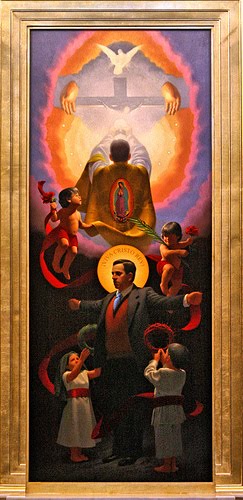
Modern Day Witnesses for the Faith; May Perpetual Light Shine Upon Them
VCR friend Tim Drake, from the Register:
"We are a Church of Martyrs. As the saying goes, “the blood of the martyrs is the seed of the Church.” From the death of Christ, on the Cross, and Stephen, the first martyr, to today, blood has been shed by those who follow Christ. We do not follow a bloodless faith.
The Vatican’s Fides agency has issued a list of all those involved in pastoral work who were killed during 2009. The list reveals where the Church’s modern “martyrs” have died for the practice of their faith. The Church no longer refers to the group as a “list of martyrs,” since the circumstances of death in many cases is unknown. Instead, they are listed as those involved in pastoral or missionary work who died violently.
Of the 37 who died in 2009, Central and South America appear to be the most dangerous places for the Catholic faith, with a total of 19 deaths. Both Colombia and Brazil had six deaths.
Thirty of those who were killed were priests, 19 of them diocesan. Two were seminarians, both of whom were killed in Mexico. Two were nuns, one a Trappist; the other a Sister of the Blessed Sacrament, who was killed in the U.S. in the state of New Mexico. Three of the total were lay people.
After Central and South America, the second most dangerous place for missionaries was Africa, with a total of 11 deaths, followed by Asia, with a death in the Philippines, and another in India. Three were from the U.S."
Here is a list of all the martyrs who died this past year . Please follow this link and say a prayer for the repose of their souls.
"We are a Church of Martyrs. As the saying goes, “the blood of the martyrs is the seed of the Church.” From the death of Christ, on the Cross, and Stephen, the first martyr, to today, blood has been shed by those who follow Christ. We do not follow a bloodless faith.
The Vatican’s Fides agency has issued a list of all those involved in pastoral work who were killed during 2009. The list reveals where the Church’s modern “martyrs” have died for the practice of their faith. The Church no longer refers to the group as a “list of martyrs,” since the circumstances of death in many cases is unknown. Instead, they are listed as those involved in pastoral or missionary work who died violently.
Of the 37 who died in 2009, Central and South America appear to be the most dangerous places for the Catholic faith, with a total of 19 deaths. Both Colombia and Brazil had six deaths.
Thirty of those who were killed were priests, 19 of them diocesan. Two were seminarians, both of whom were killed in Mexico. Two were nuns, one a Trappist; the other a Sister of the Blessed Sacrament, who was killed in the U.S. in the state of New Mexico. Three of the total were lay people.
After Central and South America, the second most dangerous place for missionaries was Africa, with a total of 11 deaths, followed by Asia, with a death in the Philippines, and another in India. Three were from the U.S."
Here is a list of all the martyrs who died this past year . Please follow this link and say a prayer for the repose of their souls.
Sunday, May 16, 2010
Great Priestly Works Accomplished in Darkness
Archbishop John Quinn gave a very well-constructed speech at the National Federation of Priests’ Councils in Houston, Texas on April 13, 2010. I listed a few paragraphs to give you the flavor but it should be read in its entirety:
"I am here to pay tribute to you, the priests of the United States. You stand on the front line. You meet the angry or confused or troubled people at the Sunday Masses in your parishes and missions. You have to try to answer their questions about the worldwide crisis caused by priests and bishops around the world. You are the ones out there in the parishes whose hearts break at the anguish of our people over the robbed innocence of their children. And you weep inside over the desecration of something so beautiful, so cherished as the priesthood is to all of us. You are the ones who meet the children and the families, and try your best to walk with them in their search for peace and healing. You are there where the wound is.
I know that all over this country, in small towns and large cities, there are priests who stay up all night in a hospital waiting room with a distraught family whose teen-age daughter lies near death from an automobile accident. I know that there are priests in rural dioceses, like the priests I knew in Oklahoma, who drive hundreds of miles both ways to one or several mission churches on Saturday evenings and then have three Masses on Sundays with baptisms, counseling, youth groups and parish gatherings in the afternoon and evening…You are the priests who have persevered when your heart sank over an admired and gifted classmate who was removed from ministry because of allegations of abuse.
…We are at a critical point in the life of the church. Here and there commentators are beginning to compare it to the magnitude of the crisis of the Reformation. This is not the place to raise these cosmic issues. But I do believe it is the place to raise the question every priest must confront today. It is the question first raised by the Jesuit Karl Rahner: “Why would a modern man want to become or remain a priest today?”
…I think of my friend, Alfred Delp, who with his hands chained in a concentration camp, signed the paper of his final vows. I think of a brother priest who for long hours in the confessional listens to the pain and torment of [society's] unimportant people…I think of a brother priest who assists daily in a hospital at the bedside of death…I think of a brother priest who as a prison chaplain proclaims over and over the message of the Gospel with never any sign of gratitude. I think of the brother priest who (in a parish) with tremendous difficulty and without any clear evidence of success plods away at the task of awakening in just a few people a small spark of faith, of hope and of charity. These and many other forms and acts of renunciation, known to God alone, are still what is decisive in the priesthood.
But there are men like these who have lived in and come from our own American dioceses.
Think of Emil Kapaun, a priest of Wichita, Kansas. In a prison camp in Korea he stole food from the commissary at night for his starving men knowing that he would be shot on sight if discovered. Depression and futility gripped many of the men in his unit. A Protestant chaplain with a wife and children at home was severely depressed and Emil knew he would die if something didn’t change. He deliberately said things to make him angry knowing that the experience of anger would bring him out of himself. It worked, and the man lived to return to his family. Emil tried everything to keep the men positive and hopeful. The men who got dysentery, he carried on his shoulders to the latrine and cleaned them. Eventually he got phlebitis and the guards took him off to die. The last thing his men heard was Emil assuring the guards he held no animosity or hatred for them.
Stanley Rother, whose bishop I was at one time, was a priest of Oklahoma City. He volunteered for the mission we had in Guatemala. He served the people with great dedication, teaching them their faith and instructing them in the social doctrine of the church. He carried on his ministry as priests he knew and worked with were murdered. His own catechists and parish leaders were abducted and murdered. Told that he was on the death list, he was urged to return to Oklahoma, which he did. But there only a short time, knowing clearly that it would mean certain death he decided to go back to Guatemala. He told his parents, “The Shepherd can’t run. I have to go back.” Father Rother was killed shortly after his return.
… Joseph Guetzloe, a Divine Word Father, was pastor of a Japanese community in San Francisco. When the Japanese were forced to move to segregation camps during World War II, Father Gutzloe asked to go with them. He voluntarily spent all the war years there with his people. A young priest, ordained one year, wrote to me about his experience during that first year and said, “ I have been looking for the lack of success in the lack of technique and finding it in the lack of holiness.”
…The cataclysmic avalanche of the sexual abuse scandal is a profoundly troubling experience for every priest. It touches not only the perpetrators and those so gravely hurt by them, but it is now engulfing the papacy itself and eroding the leadership and credibility of the bishops in the church. It forces us to ask the question of Karl Rahner, “Why would a modern man want to become or to remain a priest today?” How can an American priest persevere in the midst of such a shattering trial? How do we priests and how does the church persevere in time of severe trial?
…For St. Bernard, John the Baptist is the great image of the priesthood in the Gospel. He is the friend—the friend of the Bridegroom. An important role of the friend of the Bridegroom was that he was responsible for the joy of the guests at the wedding feast. This is how Christ presents himself in the Resurrection accounts: he is the minister of consolation. He consoles Mary at the tomb, He consoles the disciples locked in fear in the upper room, he consoles Thomas in his doubts. This is our role as priests—to console the Holy Church of God in a time of intolerable pain and suffering. We are called to be the ministers of consolation and of evangelical hope.
…And so, in a difficult time we should not forget that the great works of God have been accomplished in darkness. The people fled Egypt in the darkness; they crossed the Red Sea in the darkness; the Lord Jesus was born in Bethlehem in the darkness of night; He gave us the Eucharist and the priesthood in the darkness of the Last Supper; he died on the Cross when the Gospel says “darkness covered the earth.” He lay in the darkness of the tomb. On the third day, He rose again in the darkness, and the empty tomb was discovered “early in the morning while it was still dark.” God is at work even in the darkness.
What John of the Cross describes as the dark night of the soul has in our time become the dark night of the church. John explains that the dark night is a bewildering experience, it strips away all the visible supports. It brings a helpless, sinking feeling. But it is only truly the dark night when it is accepted as coming from God and borne in faith. The believer and the church who pass through the dark night in faith are led to the loss of everything secondary and to discover that God is not who they thought he was and they are not who they thought they were. It is the discovery that God is beyond everything we can articulate or conceive and it is the experience that we do not control God. The dark night is dark because God is infinite light overwhelming our limited capacities. It is in the experience of the dark night that the believer and the church come to know that God is all. This dark night of the church is a divine [method to teach] us painfully that we are incredibly poor and utterly dependent on God…"
"I am here to pay tribute to you, the priests of the United States. You stand on the front line. You meet the angry or confused or troubled people at the Sunday Masses in your parishes and missions. You have to try to answer their questions about the worldwide crisis caused by priests and bishops around the world. You are the ones out there in the parishes whose hearts break at the anguish of our people over the robbed innocence of their children. And you weep inside over the desecration of something so beautiful, so cherished as the priesthood is to all of us. You are the ones who meet the children and the families, and try your best to walk with them in their search for peace and healing. You are there where the wound is.
I know that all over this country, in small towns and large cities, there are priests who stay up all night in a hospital waiting room with a distraught family whose teen-age daughter lies near death from an automobile accident. I know that there are priests in rural dioceses, like the priests I knew in Oklahoma, who drive hundreds of miles both ways to one or several mission churches on Saturday evenings and then have three Masses on Sundays with baptisms, counseling, youth groups and parish gatherings in the afternoon and evening…You are the priests who have persevered when your heart sank over an admired and gifted classmate who was removed from ministry because of allegations of abuse.
…We are at a critical point in the life of the church. Here and there commentators are beginning to compare it to the magnitude of the crisis of the Reformation. This is not the place to raise these cosmic issues. But I do believe it is the place to raise the question every priest must confront today. It is the question first raised by the Jesuit Karl Rahner: “Why would a modern man want to become or remain a priest today?”
…I think of my friend, Alfred Delp, who with his hands chained in a concentration camp, signed the paper of his final vows. I think of a brother priest who for long hours in the confessional listens to the pain and torment of [society's] unimportant people…I think of a brother priest who assists daily in a hospital at the bedside of death…I think of a brother priest who as a prison chaplain proclaims over and over the message of the Gospel with never any sign of gratitude. I think of the brother priest who (in a parish) with tremendous difficulty and without any clear evidence of success plods away at the task of awakening in just a few people a small spark of faith, of hope and of charity. These and many other forms and acts of renunciation, known to God alone, are still what is decisive in the priesthood.
But there are men like these who have lived in and come from our own American dioceses.
Think of Emil Kapaun, a priest of Wichita, Kansas. In a prison camp in Korea he stole food from the commissary at night for his starving men knowing that he would be shot on sight if discovered. Depression and futility gripped many of the men in his unit. A Protestant chaplain with a wife and children at home was severely depressed and Emil knew he would die if something didn’t change. He deliberately said things to make him angry knowing that the experience of anger would bring him out of himself. It worked, and the man lived to return to his family. Emil tried everything to keep the men positive and hopeful. The men who got dysentery, he carried on his shoulders to the latrine and cleaned them. Eventually he got phlebitis and the guards took him off to die. The last thing his men heard was Emil assuring the guards he held no animosity or hatred for them.
Stanley Rother, whose bishop I was at one time, was a priest of Oklahoma City. He volunteered for the mission we had in Guatemala. He served the people with great dedication, teaching them their faith and instructing them in the social doctrine of the church. He carried on his ministry as priests he knew and worked with were murdered. His own catechists and parish leaders were abducted and murdered. Told that he was on the death list, he was urged to return to Oklahoma, which he did. But there only a short time, knowing clearly that it would mean certain death he decided to go back to Guatemala. He told his parents, “The Shepherd can’t run. I have to go back.” Father Rother was killed shortly after his return.
… Joseph Guetzloe, a Divine Word Father, was pastor of a Japanese community in San Francisco. When the Japanese were forced to move to segregation camps during World War II, Father Gutzloe asked to go with them. He voluntarily spent all the war years there with his people. A young priest, ordained one year, wrote to me about his experience during that first year and said, “ I have been looking for the lack of success in the lack of technique and finding it in the lack of holiness.”
…The cataclysmic avalanche of the sexual abuse scandal is a profoundly troubling experience for every priest. It touches not only the perpetrators and those so gravely hurt by them, but it is now engulfing the papacy itself and eroding the leadership and credibility of the bishops in the church. It forces us to ask the question of Karl Rahner, “Why would a modern man want to become or to remain a priest today?” How can an American priest persevere in the midst of such a shattering trial? How do we priests and how does the church persevere in time of severe trial?
…For St. Bernard, John the Baptist is the great image of the priesthood in the Gospel. He is the friend—the friend of the Bridegroom. An important role of the friend of the Bridegroom was that he was responsible for the joy of the guests at the wedding feast. This is how Christ presents himself in the Resurrection accounts: he is the minister of consolation. He consoles Mary at the tomb, He consoles the disciples locked in fear in the upper room, he consoles Thomas in his doubts. This is our role as priests—to console the Holy Church of God in a time of intolerable pain and suffering. We are called to be the ministers of consolation and of evangelical hope.
…And so, in a difficult time we should not forget that the great works of God have been accomplished in darkness. The people fled Egypt in the darkness; they crossed the Red Sea in the darkness; the Lord Jesus was born in Bethlehem in the darkness of night; He gave us the Eucharist and the priesthood in the darkness of the Last Supper; he died on the Cross when the Gospel says “darkness covered the earth.” He lay in the darkness of the tomb. On the third day, He rose again in the darkness, and the empty tomb was discovered “early in the morning while it was still dark.” God is at work even in the darkness.
What John of the Cross describes as the dark night of the soul has in our time become the dark night of the church. John explains that the dark night is a bewildering experience, it strips away all the visible supports. It brings a helpless, sinking feeling. But it is only truly the dark night when it is accepted as coming from God and borne in faith. The believer and the church who pass through the dark night in faith are led to the loss of everything secondary and to discover that God is not who they thought he was and they are not who they thought they were. It is the discovery that God is beyond everything we can articulate or conceive and it is the experience that we do not control God. The dark night is dark because God is infinite light overwhelming our limited capacities. It is in the experience of the dark night that the believer and the church come to know that God is all. This dark night of the church is a divine [method to teach] us painfully that we are incredibly poor and utterly dependent on God…"
Friday, May 7, 2010
Future Vice-President:"She is Worth Every Tear."
Rick Santorum has a way of breaking through the stereotypes of modern politicians. This column was published yesterday in the Philadelphia Inquirer. Htip to Reflections of a Paraplytic; I would also suggest you go over and visit Chelsea Zimmerman's blog. It is a worthwhile visit and you will leave thoroughly impressed. Both Santorum and Zimmerman do justice to the inherent beauty of life. Here is the former-Senator's column:
'Incompatible with life." The doctor's words kept echoing in my head as I held my sobbing wife, Karen, just four days after the birth of our eighth child, Isabella Maria.
Bella was born with three No. 18 chromosomes, rather than the normal two. The statistics were heartbreaking: About 90 percent of children with the disorder, known as trisomy 18, die before or during birth, and 90 percent of those who survive die within the first year.
Bella was baptized that day, and then we spent every waking hour at her bedside, giving her a lifetime's worth of love and care. However, not only did she not die; she came home in just 10 days.
She was sent home on hospice care, strange as that sounded for a newborn. The hospice doctor visited us the next day and described in graphic detail how Bella would die. In sum, she could die at any time without warning, and the best we could hope for was that she would die of the common cold.
Karen and I discontinued hospice so that we and our amazing doctors, James Baugh and Sunil Kapoor, could get to work focusing on Bella's health, not her death.
Like so many moms of special kids, Karen is a warrior, caring for Bella night and day and, at times, fighting with health-care providers and our insurance company to get our daughter the care she needs.
Being the parent of a special child gives one exceptional insight into the negative perception of the disabled among many medical professionals, particularly when they see your child as having an intellectual disability. Sadly, we discovered that not only did we have to search for doctors who had experience with trisomy 18. We also had to search for those who saw Bella not as a fatal diagnosis, but as a wanted and loved daughter and sister, as well as a beautiful gift from God.
We knew from experience that Children's Hospital of Philadelphia was such a place. Fourteen years ago, we had another baby who was diagnosed as having no hope, but CHOP's Dr. Scott Adzick gave him a shot at life. In the end, we lost our son Gabriel, but we will always be grateful to Dr. Adzick for affirming the value of his life.
When Bella was 3 months old, she needed some minor but vital surgery. Some doctors told us that a child like Bella wouldn't survive surgery or, even worse, that surgery was "not recommended" because of her genetic condition - in other words, that her life wasn't worth saving. So we again turned to the Children's Hospital and found compassion, concern, and hope in Dr. Thane Blinman. He told us he had several trisomy 18 patients who did well - and so did Bella.
Next week, we will mark Bella's second birthday. Over these two years, we have endured two close brushes with death, lots of sleepless nights, more than a month in CHOP's intensive care unit, and the constant anxiety that the next day could be our little girl's last.
And yet we have also been inspired - by her fighting spirit, and by the miracle of seeing our little flower blossom into a loving, joyful child who is at the center of our family life.
Most children with trisomy 18 diagnosed in the womb are aborted. Most who survive birth are given hospice care until they die. In these cases, doctors advise parents that these disabled children will die young or be a burden to them and society. But couldn't the same be said of many healthy children?
All children are a gift that comes with no guarantees. While Bella's life may not be long, and though she requires our constant care, she is worth every tear.
Living with Bella has been a course in character and virtue. She makes us better. And it's not just our family; she enriches every life she touches. In the end, isn't that what every parent hopes for his or her child?
Happy birthday, Isabella!
God Bless you and your family, Senator!
'Incompatible with life." The doctor's words kept echoing in my head as I held my sobbing wife, Karen, just four days after the birth of our eighth child, Isabella Maria.
Bella was born with three No. 18 chromosomes, rather than the normal two. The statistics were heartbreaking: About 90 percent of children with the disorder, known as trisomy 18, die before or during birth, and 90 percent of those who survive die within the first year.
Bella was baptized that day, and then we spent every waking hour at her bedside, giving her a lifetime's worth of love and care. However, not only did she not die; she came home in just 10 days.
She was sent home on hospice care, strange as that sounded for a newborn. The hospice doctor visited us the next day and described in graphic detail how Bella would die. In sum, she could die at any time without warning, and the best we could hope for was that she would die of the common cold.
Karen and I discontinued hospice so that we and our amazing doctors, James Baugh and Sunil Kapoor, could get to work focusing on Bella's health, not her death.
Like so many moms of special kids, Karen is a warrior, caring for Bella night and day and, at times, fighting with health-care providers and our insurance company to get our daughter the care she needs.
Being the parent of a special child gives one exceptional insight into the negative perception of the disabled among many medical professionals, particularly when they see your child as having an intellectual disability. Sadly, we discovered that not only did we have to search for doctors who had experience with trisomy 18. We also had to search for those who saw Bella not as a fatal diagnosis, but as a wanted and loved daughter and sister, as well as a beautiful gift from God.
We knew from experience that Children's Hospital of Philadelphia was such a place. Fourteen years ago, we had another baby who was diagnosed as having no hope, but CHOP's Dr. Scott Adzick gave him a shot at life. In the end, we lost our son Gabriel, but we will always be grateful to Dr. Adzick for affirming the value of his life.
When Bella was 3 months old, she needed some minor but vital surgery. Some doctors told us that a child like Bella wouldn't survive surgery or, even worse, that surgery was "not recommended" because of her genetic condition - in other words, that her life wasn't worth saving. So we again turned to the Children's Hospital and found compassion, concern, and hope in Dr. Thane Blinman. He told us he had several trisomy 18 patients who did well - and so did Bella.
Next week, we will mark Bella's second birthday. Over these two years, we have endured two close brushes with death, lots of sleepless nights, more than a month in CHOP's intensive care unit, and the constant anxiety that the next day could be our little girl's last.
And yet we have also been inspired - by her fighting spirit, and by the miracle of seeing our little flower blossom into a loving, joyful child who is at the center of our family life.
Most children with trisomy 18 diagnosed in the womb are aborted. Most who survive birth are given hospice care until they die. In these cases, doctors advise parents that these disabled children will die young or be a burden to them and society. But couldn't the same be said of many healthy children?
All children are a gift that comes with no guarantees. While Bella's life may not be long, and though she requires our constant care, she is worth every tear.
Living with Bella has been a course in character and virtue. She makes us better. And it's not just our family; she enriches every life she touches. In the end, isn't that what every parent hopes for his or her child?
Happy birthday, Isabella!
God Bless you and your family, Senator!
Wednesday, April 28, 2010
Becareful What You Wish For...
By a 5 to 4 decision The Supreme Court of the United States overturned a lower court ruling stating that an erected cross at a national park violated the separation of Church and State. The majority, opinion written by Justice Kennedy, noted that the cross was non-sectarian in meaning and not reflecting back on a certain religion:
"Although certainly a Christian symbol, the cross was not emplaced on Sunrise Rock to promote a Christian message," Justice Anthony Kennedy wrote of the cross that was put up in 1934 by the Veterans of Foreign Wars to commemorate U.S. soldiers who died in World War I. "Rather, those who erected the cross intended simply to honor our nation's fallen soldiers."
So here is the irony that will kill you. The liberals in this country have tried upon decades to dilute every possible Christian symbol from its true religious meaning, taking Christ out of Christmas, calling Christmas trees holiday trees and the like.
Now the conservative Justices are throwing it back at them stating that a cross is not a defacto Christian symbol promoting a Christian message, the death and resurrection of Christ. Basically saying, “Congratulations, you Libs win, a cross has no Christian message tied to it.”
Does anyone actually believe Roberts, Alito, Thomas and Scalia think a cross has no Christian significance or message behind it when displayed? Especially when used to honor the dead? Did the VFW, when they put it up in 1934, thought it had no religious significance? Too funny.
Also noteworthy is the Kennedy has been voting almost lockstep with the Conservative wing of this court for a while now. Sotomayor must have pushed him over the edge,
"Although certainly a Christian symbol, the cross was not emplaced on Sunrise Rock to promote a Christian message," Justice Anthony Kennedy wrote of the cross that was put up in 1934 by the Veterans of Foreign Wars to commemorate U.S. soldiers who died in World War I. "Rather, those who erected the cross intended simply to honor our nation's fallen soldiers."
So here is the irony that will kill you. The liberals in this country have tried upon decades to dilute every possible Christian symbol from its true religious meaning, taking Christ out of Christmas, calling Christmas trees holiday trees and the like.
Now the conservative Justices are throwing it back at them stating that a cross is not a defacto Christian symbol promoting a Christian message, the death and resurrection of Christ. Basically saying, “Congratulations, you Libs win, a cross has no Christian message tied to it.”
Does anyone actually believe Roberts, Alito, Thomas and Scalia think a cross has no Christian significance or message behind it when displayed? Especially when used to honor the dead? Did the VFW, when they put it up in 1934, thought it had no religious significance? Too funny.
Also noteworthy is the Kennedy has been voting almost lockstep with the Conservative wing of this court for a while now. Sotomayor must have pushed him over the edge,
Sunday, April 18, 2010
Progress and Perspective on the Catholic Church's Abuse Scandal
 Understanding that one case of clerical abuse against any minor is reprehensible, evil and intolerable, we should also be aware of the progress our Church has made protecting our children in the recent years.
The chart directly above is from the John Jay study (2002) - the most comprehensive study on this topic -and shows the strides the church has made in addressing this issue and the rapid decline shown in these atrocities during the last two Papacies.
Rich Leonardi at Cincinnati.com puts into context how effective the Church's implemented efforts have been to protect children with some recent data:
"By virtually all accounts, [Benedict XVI's] reforms have been successful and, coupled with the efforts of local bishops, have led to a sharp decrease in incidents of abuse. In 2009, only six credible accusations were reported in the United States for a church that counts more than 65 million members. (By way of comparison, a 2004 study commissioned by the U.S. Department of Education found that nearly 10 percent of U.S. public school students reported having been targeted with sexual attention by school employees.)
While any case of abuse is a case too many, the church's record of safety is a remarkable achievement for such a large organization; we have Pope Benedict to thank for that."
So 6 cases in 65,000,000. I tried to get a percentage to visually show you how small this number is, but the calculator that comes with MS Office could not display a number this low and came up with an error message. Then I went to an Excel spreadsheet and it could not display it either; another error message.
By way of comparison (and to underscore what Leonardi infers), VCR friend Tom Hoopes quotes Hofstra University researcher Charol Shakeshaft with a comment that **should** unleash a media frenzy and widespread investigations if the mainstream media had any legitimacy, or desire, to investigate their Democratic Party sibling, the public school teachers' union, at the same level of intensity they have unleashed against the Catholic Church, stating: "
"...Hofstra University researcher Charol Shakeshaft looked into the problem [of abuse in the public schools], and the first thing that came to her mind when Education Week reported on the study were the daily headlines about the Catholic Church.“[T]hink the Catholic Church has a problem?” she said. “The physical sexual abuse of students in schools is likely more than 100 times the abuse by priests."
Then Hoopes quotes a piece by Wayne Laugesen that drives a bus through the double-standard:
..."Yet, during the first half of 2002, the 61 largest newspapers in California ran nearly 2,000 stories about sexual abuse in Catholic institutions, mostly concerning past allegations. During the same period, those newspapers ran four stories about the federal government’s discovery of the much larger — and ongoing — abuse scandal in public schools."
So while I read yet another New York Times' piece this morning, we should all be able to easily identify with assurance what is going on here.
Monday, April 12, 2010
Two Unlikely Benedict Defenders Should Give Everyone Pause
Here are two very unexpected defenders of the Catholic Church and Benedict XVI.
My father has said, "I don't agree with any of Ed Koch's views, but I can't help finding myself liking him." We can all like him a little more with this op ed piece:
"I believe the continuing attacks by the media on the Roman Catholic Church and Pope Benedict XVI have become manifestations of anti-Catholicism. The procession of articles on the same events are, in my opinion, no longer intended to inform, but simply to castigate.
The sexual molestation of children, principally boys, is horrendous. This is agreed to by everyone, Catholics, the Church itself, as well as non-Catholics and the media. On a number of occasions on the Church's behalf, the pope has admitted fault and asked for forgiveness.
For example, The New York Times reported April 18, 2008 that the pope "came face to face with a scandal that has left lasting wounds on the American church Thursday, holding a surprise meeting with several victims of sexual abuse by priests in the Boston area. ... 'No words of mine could describe the pain and harm inflicted by such abuse,' the pope said in his homily. 'It is important that those who have suffered be given loving pastoral attention."
...Many in the media who are pounding on the Church and the pope today clearly do it with delight, and some with malice. The reason for the constant assaults, I believe, is there are many in the media and some Catholics as well as many in the public who object to and are incensed by positions the Church holds, including opposition to all abortions, opposition to homosexual sex and same-sex marriage, retention of celibacy rules for priests, exclusion of women from the clergy, opposition to birth-control measures involving condoms and prescription drugs, and opposition to civil divorce."
And here is a defense by John Stephenson, a ... Lutheran theologian:
"The secular press has had it in for Joseph Ratzinger for going on three decades. Before his election as Pope in the spring of 2005, he was routinely derided in his homeland as the Panzerkardinal (“tank cardinal”) and caricatured in North America as the “Enforcer” or even the “Rottweiler.” The roots of this negative reputation stretch back at least as far as the book-length interview he granted to the Italian journalist Vittorio Messori that catapulted him to global fame when published as The Ratzinger Report in 1985.
But shrewd observers must wonder about the startling disproportion between the enormous hue and cry artificially whipped up by the media and the softly spoken real life figure who seems always to have avoided hyperbole like the plague.
(Blogger Note: Here comes the firework finale, maybe one of the most insightful paragraphs written on this spewing of hatred:)
...The negative reaction aroused already by the Ratzinger Report laid bare the sheer fury shared by Roman Catholic Modernists and the unbelieving world in general against anyone who dares to intimate that the historic Christian religion is, to put it bluntly, true. Neither apostates within Holy Christendom nor naked unbelievers outside her borders will ever forgive Ratzinger for the grave breach of secularist, pluralist etiquette involved in the first volume of his Jesus of Nazareth. It goes without saying (and around the Holy Week of each year the several forms of mainstream media say it loudly, often, and emphatically) that Jesus was an ordinary man, a wacko apocalyptist, or a failed political revolutionary. Stones must fly and clubs be brandished against a learned man fully familiar with all the “Jesus of history” literature from Reimarus to the present, who winsomely draws on believing scholarship of all confessions to offer a calm and cogent argument that the real, actual Jesus is the one who meets us in the Gospel record. Where the North American liberal intelligentsia can offer no refutation, they spit contempt. And a Western Europe sunk in a new heathenism and undergoing Islamic takeover can only howl at this attempt to arrest its suicidal downward slide."
htip to Fr. Z on the Stephenson piece.
My father has said, "I don't agree with any of Ed Koch's views, but I can't help finding myself liking him." We can all like him a little more with this op ed piece:
"I believe the continuing attacks by the media on the Roman Catholic Church and Pope Benedict XVI have become manifestations of anti-Catholicism. The procession of articles on the same events are, in my opinion, no longer intended to inform, but simply to castigate.
The sexual molestation of children, principally boys, is horrendous. This is agreed to by everyone, Catholics, the Church itself, as well as non-Catholics and the media. On a number of occasions on the Church's behalf, the pope has admitted fault and asked for forgiveness.
For example, The New York Times reported April 18, 2008 that the pope "came face to face with a scandal that has left lasting wounds on the American church Thursday, holding a surprise meeting with several victims of sexual abuse by priests in the Boston area. ... 'No words of mine could describe the pain and harm inflicted by such abuse,' the pope said in his homily. 'It is important that those who have suffered be given loving pastoral attention."
...Many in the media who are pounding on the Church and the pope today clearly do it with delight, and some with malice. The reason for the constant assaults, I believe, is there are many in the media and some Catholics as well as many in the public who object to and are incensed by positions the Church holds, including opposition to all abortions, opposition to homosexual sex and same-sex marriage, retention of celibacy rules for priests, exclusion of women from the clergy, opposition to birth-control measures involving condoms and prescription drugs, and opposition to civil divorce."
And here is a defense by John Stephenson, a ... Lutheran theologian:
"The secular press has had it in for Joseph Ratzinger for going on three decades. Before his election as Pope in the spring of 2005, he was routinely derided in his homeland as the Panzerkardinal (“tank cardinal”) and caricatured in North America as the “Enforcer” or even the “Rottweiler.” The roots of this negative reputation stretch back at least as far as the book-length interview he granted to the Italian journalist Vittorio Messori that catapulted him to global fame when published as The Ratzinger Report in 1985.
But shrewd observers must wonder about the startling disproportion between the enormous hue and cry artificially whipped up by the media and the softly spoken real life figure who seems always to have avoided hyperbole like the plague.
(Blogger Note: Here comes the firework finale, maybe one of the most insightful paragraphs written on this spewing of hatred:)
...The negative reaction aroused already by the Ratzinger Report laid bare the sheer fury shared by Roman Catholic Modernists and the unbelieving world in general against anyone who dares to intimate that the historic Christian religion is, to put it bluntly, true. Neither apostates within Holy Christendom nor naked unbelievers outside her borders will ever forgive Ratzinger for the grave breach of secularist, pluralist etiquette involved in the first volume of his Jesus of Nazareth. It goes without saying (and around the Holy Week of each year the several forms of mainstream media say it loudly, often, and emphatically) that Jesus was an ordinary man, a wacko apocalyptist, or a failed political revolutionary. Stones must fly and clubs be brandished against a learned man fully familiar with all the “Jesus of history” literature from Reimarus to the present, who winsomely draws on believing scholarship of all confessions to offer a calm and cogent argument that the real, actual Jesus is the one who meets us in the Gospel record. Where the North American liberal intelligentsia can offer no refutation, they spit contempt. And a Western Europe sunk in a new heathenism and undergoing Islamic takeover can only howl at this attempt to arrest its suicidal downward slide."
htip to Fr. Z on the Stephenson piece.
Friday, April 9, 2010
Benedict XVI: "Behold the Man!"
Paul Kokoski of Hamilton, Canada, says it more clearly, succinctly and with more of an overwhelming truth than I could have written in his opinion piece in USA Today:
"Ecce homo," "Behold the man!" These were the words spoken by Pontius Pilate when he presented a scourged Jesus Christ to a hostile mob shortly before his crucifixion. The same words aptly apply today to Pope Benedict XVI, as he is being held up to unprecedented ridicule and scorn by a hateful press and a world so out of touch with its spiritual nature and moral being.
One can almost hear Jesus saying to the peaceful and benevolent pope: "If the world hates you, remember that it hated me first" (John 15:18). Contrary to his critics, the pope, like Jesus, is completely innocent and is doing everything in his power to weed out those priests guilty of sexual abuse and to justly compensate victims for their suffering.
In fact, he is the one who has tackled these things head on. [Blogger Note: Benedict was one of the first high-ranking prelates to public denounce these horrible scandals calling them, "Filth."] Remember that even Jesus had his Judas. But the world wants to see the death of the church because it knows the church is the mother of all saints.
It knows that the Catholic Church is the last bastion of hope against a materialistic world that craves immorality at every step, including homosexuality, same-sex marriage, easy divorce, abortion, radical feminism, contraception, embryonic stem cell research and cloning.
Benedict will be remembered not for the scandals of a few priests but for his intense suffering in protecting the faith from wolves in sheep's clothing. He will be known as one of the greatest of Catholic martyrs.
Amen, Paul. Kudos.
"Ecce homo," "Behold the man!" These were the words spoken by Pontius Pilate when he presented a scourged Jesus Christ to a hostile mob shortly before his crucifixion. The same words aptly apply today to Pope Benedict XVI, as he is being held up to unprecedented ridicule and scorn by a hateful press and a world so out of touch with its spiritual nature and moral being.
One can almost hear Jesus saying to the peaceful and benevolent pope: "If the world hates you, remember that it hated me first" (John 15:18). Contrary to his critics, the pope, like Jesus, is completely innocent and is doing everything in his power to weed out those priests guilty of sexual abuse and to justly compensate victims for their suffering.
In fact, he is the one who has tackled these things head on. [Blogger Note: Benedict was one of the first high-ranking prelates to public denounce these horrible scandals calling them, "Filth."] Remember that even Jesus had his Judas. But the world wants to see the death of the church because it knows the church is the mother of all saints.
It knows that the Catholic Church is the last bastion of hope against a materialistic world that craves immorality at every step, including homosexuality, same-sex marriage, easy divorce, abortion, radical feminism, contraception, embryonic stem cell research and cloning.
Benedict will be remembered not for the scandals of a few priests but for his intense suffering in protecting the faith from wolves in sheep's clothing. He will be known as one of the greatest of Catholic martyrs.
Amen, Paul. Kudos.
Saturday, April 3, 2010
The Best of VCR: Easter's Lesson: Evil's Mortal Wound
This is one of my favorite pieces ever written. I read it throughout the year whenever I am discouraged and it puts everything into perspective. Easter is meant to lift up the discouraged. Just think of the mindset of the apostles and followers (including Mary below) that morning before witnessing the empty tomb. Blessed Easter to all!
 "... Two days later, early in the morning, a converted sinner is found walking in a cemetery — she whose heart had been captured by Him without, as other men had done, laying it waste. She was in search of a tomb and a dead body which she hoped she might anoint with spices. The idea of the Resurrection did not seem to enter her mind — she who herself had risen from a tomb sealed by the seven devils of sin. Finding the tomb empty she broke again into a fountain of tears. No one who weeps ever looks upwards. With her eyes cast down as the brightness of the early sunrise swept over the dew-covered grass, she vaguely perceived someone near her, who asked: "Woman, why weepest thou?" (John 20:15).
Mary, thinking it might have been the gardener said: "Because they have taken away my Lord; and I do not know where they have laid him."
The figure before her spoke only one word, one name, and in a tone so sweet and ineffably tender that it could be the only unforgettable voice of the world; and that one word was: "Mary."
No one could ever say "Mary" as He said it. In that moment she knew Him. Dropping into the Aramaic of her mother’s speech she answered but one word: "Rabboni"! "Master"! And she fell at His feet— she was always there, anointing them at a supper, standing before them at a Cross, and now kneeling before Him in the Glory of an Easter morn.
The Cross had asked the questions; the Resurrection had answered them.
The Cross had asked the question: How far can Power go in the world?. The Resurrection answered: Power ends in its own destruction, for those who slew [their God] lost the day.
The Cross had asked: Why does God permit evil and sin to nail Justice to a tree? The Resurrection answered: That sin, having done its worst, might exhaust itself and thus be overcome by Love that is stronger than either sin or death.
Thus there emerges the Easter lesson that the power of evil and the chaos of any one moment can be defied and conquered, for the basis of our hope is not in any construct of human power, but in the Power of God Who has given to the evil of this earth its one mortal wound — an open tomb, a gaping sepulchre, an empty grave. "
-Archbishop Fulton J. Sheen
 "... Two days later, early in the morning, a converted sinner is found walking in a cemetery — she whose heart had been captured by Him without, as other men had done, laying it waste. She was in search of a tomb and a dead body which she hoped she might anoint with spices. The idea of the Resurrection did not seem to enter her mind — she who herself had risen from a tomb sealed by the seven devils of sin. Finding the tomb empty she broke again into a fountain of tears. No one who weeps ever looks upwards. With her eyes cast down as the brightness of the early sunrise swept over the dew-covered grass, she vaguely perceived someone near her, who asked: "Woman, why weepest thou?" (John 20:15).
Mary, thinking it might have been the gardener said: "Because they have taken away my Lord; and I do not know where they have laid him."
The figure before her spoke only one word, one name, and in a tone so sweet and ineffably tender that it could be the only unforgettable voice of the world; and that one word was: "Mary."
No one could ever say "Mary" as He said it. In that moment she knew Him. Dropping into the Aramaic of her mother’s speech she answered but one word: "Rabboni"! "Master"! And she fell at His feet— she was always there, anointing them at a supper, standing before them at a Cross, and now kneeling before Him in the Glory of an Easter morn.
The Cross had asked the questions; the Resurrection had answered them.
The Cross had asked the question: How far can Power go in the world?. The Resurrection answered: Power ends in its own destruction, for those who slew [their God] lost the day.
The Cross had asked: Why does God permit evil and sin to nail Justice to a tree? The Resurrection answered: That sin, having done its worst, might exhaust itself and thus be overcome by Love that is stronger than either sin or death.
Thus there emerges the Easter lesson that the power of evil and the chaos of any one moment can be defied and conquered, for the basis of our hope is not in any construct of human power, but in the Power of God Who has given to the evil of this earth its one mortal wound — an open tomb, a gaping sepulchre, an empty grave. "
-Archbishop Fulton J. Sheen
Friday, April 2, 2010
Prophecies Foretold Bring Us Back to the Foot of the Cross
Having gone through Catholic school and religious eductaion my whole life, I have never read in its entirety the "Suffering Servant" scripture at the end of the book of Isiaih (53). This was written 700 years before the birth of Christ, but is there any doubt who this Jewish prophet is talking about?:
5But he was wounded for our transgressions, he was bruised for our iniquities: the chastisement of our peace was upon him; and with his stripes we are healed.
6All we like sheep have gone astray; we have turned every one to his own way; and the LORD hath laid on him the iniquity of us all.
7He was oppressed, and he was afflicted, yet he opened not his mouth: he is brought as a lamb to the slaughter, and as a sheep before her shearers is dumb, so he openeth not his mouth.
12 …because he hath poured out his soul unto death: and he was numbered with the transgressors; and he bare the sin of many, and made intercession for the transgressors.
And although obviously I was not at the crucifixion, you are brought closer to understanding this pure act of sacrifice and love and what Christ had to endure by reading the prophecy in Psalms 22:14-18. God gives us insight to what he would feel at the crucifixion:
14 I am poured out like water, And all My bones are out of joint; My heart is like wax; It has melted within Me.
15 My strength is dried up like a potsherd, And My tongue clings to My jaws; You have brought Me to the dust of death.
16 For dogs have surrounded Me; The congregation of the wicked has enclosed Me. They pierced My hands and My feet;
17 I can count all My bones. They look and stare at Me.
18 They divide My garments among them, And for My clothing they cast lots.
How can we not feel remorse for the times we chose a path away from God after reading this?
5But he was wounded for our transgressions, he was bruised for our iniquities: the chastisement of our peace was upon him; and with his stripes we are healed.
6All we like sheep have gone astray; we have turned every one to his own way; and the LORD hath laid on him the iniquity of us all.
7He was oppressed, and he was afflicted, yet he opened not his mouth: he is brought as a lamb to the slaughter, and as a sheep before her shearers is dumb, so he openeth not his mouth.
12 …because he hath poured out his soul unto death: and he was numbered with the transgressors; and he bare the sin of many, and made intercession for the transgressors.
And although obviously I was not at the crucifixion, you are brought closer to understanding this pure act of sacrifice and love and what Christ had to endure by reading the prophecy in Psalms 22:14-18. God gives us insight to what he would feel at the crucifixion:
14 I am poured out like water, And all My bones are out of joint; My heart is like wax; It has melted within Me.
15 My strength is dried up like a potsherd, And My tongue clings to My jaws; You have brought Me to the dust of death.
16 For dogs have surrounded Me; The congregation of the wicked has enclosed Me. They pierced My hands and My feet;
17 I can count all My bones. They look and stare at Me.
18 They divide My garments among them, And for My clothing they cast lots.
How can we not feel remorse for the times we chose a path away from God after reading this?
Saturday, March 27, 2010
My Return Love Affair with Music
On a brutal 32-hour trip back from Southeast Asia, I rediscovered my love for listening to music in headphones. Here are some of my favorites that got me through the trip, that you may never have heard:
Coinleach Glas an Fhómhair - Clannad Shows you how beautiful the Gaelic language can be. You won't understand a word, but be compelled by the beauty of this love song.
Book of Love - Peter Gabriel PG was kind enough to release a new album just before my trip to help my travel along. This is a cover that he did of The Magnetic Fields' song. This rendition keeps running through my head.
Easter - Marillion This is my favorite all-time song. It is based on a poem written by W.B. Yeats that he wrote after Ireland's Easter Day rebellion in 1916. The poem asks the rhetorical question to the grieving... what can you do after a tragedy in your life, "make a stone of your heart?"; with the implication you can't stop feeling or loving. One of the best guitar solo's ever.
I Was Brought to My Senses - Sting A great song to listen in head phones. Sounds in the beginning like an old seafarer's song, then breaks into beautiful layers of instruments.
Song for Ireland - Mary Black One of the best female vocals I have heard. Mary Black's voice is crystal. She is just accompanied by a piano, but it sounds like so much more because of the power of her voice.
Sky Blue - Peter Gabriel One of the best 30,000 ft. plane reflections songs, for weary travelers who just want to get home. The Blind Boys of Alabama frame the song with their rhythmic background vocals.
A lot of Irish influence as I was traveling over St. Patrick's Day. You can see I also went melodic in my old age. These songs are worth a listen when on typing your computer. Enjoy.
Coinleach Glas an Fhómhair - Clannad Shows you how beautiful the Gaelic language can be. You won't understand a word, but be compelled by the beauty of this love song.
Book of Love - Peter Gabriel PG was kind enough to release a new album just before my trip to help my travel along. This is a cover that he did of The Magnetic Fields' song. This rendition keeps running through my head.
Easter - Marillion This is my favorite all-time song. It is based on a poem written by W.B. Yeats that he wrote after Ireland's Easter Day rebellion in 1916. The poem asks the rhetorical question to the grieving... what can you do after a tragedy in your life, "make a stone of your heart?"; with the implication you can't stop feeling or loving. One of the best guitar solo's ever.
I Was Brought to My Senses - Sting A great song to listen in head phones. Sounds in the beginning like an old seafarer's song, then breaks into beautiful layers of instruments.
Song for Ireland - Mary Black One of the best female vocals I have heard. Mary Black's voice is crystal. She is just accompanied by a piano, but it sounds like so much more because of the power of her voice.
Sky Blue - Peter Gabriel One of the best 30,000 ft. plane reflections songs, for weary travelers who just want to get home. The Blind Boys of Alabama frame the song with their rhythmic background vocals.
A lot of Irish influence as I was traveling over St. Patrick's Day. You can see I also went melodic in my old age. These songs are worth a listen when on typing your computer. Enjoy.
Wednesday, March 17, 2010
Best of VCR: My Favorite St. Patrick's Day Joke
Here is my favorite St. Patrick's Day joke. It is chock full of all the personality and humor that you would come to expect from a supreme race of story tellers!
A backpacker traveling on foot through Europe, stops in the Eternal City of Rome, and finds himself tagging along on a tour of the Vatican. While on the tour, he spots a gold-plated phone guarded by a lone Swiss Guard with a sign over it that says, “Converse with the Almighty - $10,000 a minute.” Being intrigued by the sight, he confirms with the Swiss Guard that it was indeed a hotline to Heaven, and he could surely talk to the God if he could afford the fee. Being penniless, he laments at his loss opportunity and continues on his way.
Several months later he finds himself hiking through the rolling, green hills of the Irish countryside and ducks into a small Irish pub to dodge an intensifying rain storm.
After shaking the raindrops off his cap, he sees to his disbelief what appears to be the same gold-plated phone that he saw at the Vatican months prior, positioned behind the bar. This one; however, has an accompanying sign that reads, “Converse with the Almighty - $.25 a minute”.
Being in a state of stark confusion, and after confirming with the bartender that the phones were indeed identical, the backpacker inquires how can the Vatican - with all of its rich treasures - be charging $10,000 a minute, and this small pub - with many leaks in the ceiling- be charging only $.25 a minute.
The bartender breaking a half grin and instantaneously coming to life with sparkling eyes as if he had been waiting for this question for centuries leans towards the backpacker. With an overflowing pride that he can not fully contain and all the assurance and conviction that can be found in and framed by a strong Irish brogue, the bartender whispers his secret, “My dear traveler, the answer is obvious, here it is a local call!”
A backpacker traveling on foot through Europe, stops in the Eternal City of Rome, and finds himself tagging along on a tour of the Vatican. While on the tour, he spots a gold-plated phone guarded by a lone Swiss Guard with a sign over it that says, “Converse with the Almighty - $10,000 a minute.” Being intrigued by the sight, he confirms with the Swiss Guard that it was indeed a hotline to Heaven, and he could surely talk to the God if he could afford the fee. Being penniless, he laments at his loss opportunity and continues on his way.
Several months later he finds himself hiking through the rolling, green hills of the Irish countryside and ducks into a small Irish pub to dodge an intensifying rain storm.
After shaking the raindrops off his cap, he sees to his disbelief what appears to be the same gold-plated phone that he saw at the Vatican months prior, positioned behind the bar. This one; however, has an accompanying sign that reads, “Converse with the Almighty - $.25 a minute”.
Being in a state of stark confusion, and after confirming with the bartender that the phones were indeed identical, the backpacker inquires how can the Vatican - with all of its rich treasures - be charging $10,000 a minute, and this small pub - with many leaks in the ceiling- be charging only $.25 a minute.
The bartender breaking a half grin and instantaneously coming to life with sparkling eyes as if he had been waiting for this question for centuries leans towards the backpacker. With an overflowing pride that he can not fully contain and all the assurance and conviction that can be found in and framed by a strong Irish brogue, the bartender whispers his secret, “My dear traveler, the answer is obvious, here it is a local call!”
Thursday, March 4, 2010
Best of VCR: The Temperaments of God
Originally posted 06/05/2008:
I often noted, and very much over the years tried to reconcile, the difference in temperaments between the God in the Old Testament (Yaweh), and the same God in the New Testament (God the Father).
Yaweh was a very stern God who would strike down your enemies down and let you wander 40 years in the desert if you made a mistake. The kind God in the New Testament - - who was the same exact God -- was a loving Father, and through his Son told us to love our enemies. He was a God who allowed what was most dear to Him to be sacraficed for our mistakes.
I once had a college professor try to offer an explanation. He said that in the Old Testament we were in our infancy stage with God and he treated us as such, like toddlers. Don’t touch the outlet, don’t go in the street, you will be severely punished and have to sit on the couch if you do what you are thinking. He said by the time the New Testament came along, we had grown up and our relationship with God advanced lovingly to where our parent became more of a trusted friend and confidant.
This made somewhat sense to me, but once again the words of St. Jean Vianney brought me closer to what was the true answer. He directed me to the exact beginning of the New Testament for the time when God’s temperament changed.
He said God’s anger was "hanging over our heads like a sword ready to strike us down, [but] as soon as the Holy Virgin appeared upon this earth, his anger was appeased." He saw the level of perfection that his creation could achieve, a creature than would never disobey, betray or disappoint Him; there the Virgin Mother stood in front of Him. Once again, His anger was "appeased." His temperament was changed.
Vianney tells of the special relationship that the Trinity has with this perfect human creation:
God views the Blessed Mother as the masterpiece of his creation that He made with his own hands. He takes great pride in her because it is His work done to absolute perfection.
The Son takes pleasure in the heart of Mary, from which He drew his mortal blood (the Blessed Mother provided the mortal makeup to Christ). He used this blood He received from her to "ransom" it for us so that we might be reconciled to the Father.
And The Holy Spirit considers the Blessed Mother His temple, a place of His dwelling, because He conceived with in her.
These beautiful insights from St. Jean Vianney really reinforces why we venerate the Blessed Mother, and why she will never be refuse any request she makes on our behalf in the presence of God.
So the next time you are watching The Ten Commandments with Charlton Heston and see Yaweh striking down Israel’s enemies in the Red Sea, venerate Our Blessed Mother. Because of her we were not next.
I often noted, and very much over the years tried to reconcile, the difference in temperaments between the God in the Old Testament (Yaweh), and the same God in the New Testament (God the Father).
Yaweh was a very stern God who would strike down your enemies down and let you wander 40 years in the desert if you made a mistake. The kind God in the New Testament - - who was the same exact God -- was a loving Father, and through his Son told us to love our enemies. He was a God who allowed what was most dear to Him to be sacraficed for our mistakes.
I once had a college professor try to offer an explanation. He said that in the Old Testament we were in our infancy stage with God and he treated us as such, like toddlers. Don’t touch the outlet, don’t go in the street, you will be severely punished and have to sit on the couch if you do what you are thinking. He said by the time the New Testament came along, we had grown up and our relationship with God advanced lovingly to where our parent became more of a trusted friend and confidant.
This made somewhat sense to me, but once again the words of St. Jean Vianney brought me closer to what was the true answer. He directed me to the exact beginning of the New Testament for the time when God’s temperament changed.
He said God’s anger was "hanging over our heads like a sword ready to strike us down, [but] as soon as the Holy Virgin appeared upon this earth, his anger was appeased." He saw the level of perfection that his creation could achieve, a creature than would never disobey, betray or disappoint Him; there the Virgin Mother stood in front of Him. Once again, His anger was "appeased." His temperament was changed.
Vianney tells of the special relationship that the Trinity has with this perfect human creation:
God views the Blessed Mother as the masterpiece of his creation that He made with his own hands. He takes great pride in her because it is His work done to absolute perfection.
The Son takes pleasure in the heart of Mary, from which He drew his mortal blood (the Blessed Mother provided the mortal makeup to Christ). He used this blood He received from her to "ransom" it for us so that we might be reconciled to the Father.
And The Holy Spirit considers the Blessed Mother His temple, a place of His dwelling, because He conceived with in her.
These beautiful insights from St. Jean Vianney really reinforces why we venerate the Blessed Mother, and why she will never be refuse any request she makes on our behalf in the presence of God.
So the next time you are watching The Ten Commandments with Charlton Heston and see Yaweh striking down Israel’s enemies in the Red Sea, venerate Our Blessed Mother. Because of her we were not next.
Saturday, February 20, 2010
US Catholic Church Growing
Despite the most horrible, stomach-turning scandals ever in the history of the Roman Catholic Church coming to light over the past decade, our numbers are growing:
"U.S. membership has increased in the Catholic Church — the nation's largest Christian body — but the No. 2 Southern Baptist Convention, along with most mainline Protestant denominations, reported continuing decline, according to new figures released by the National Council of Churches."
Take a look at these growth numbers over the past year, comparing the home team with other Protestant sects:
The Catholic Church: 68.1 million, up 1.49 percent. [Blogger note: represents over 1 million people entering]
Southern Baptist Convention: 16.2 million, down 0.24 percent.
The United Methodist Church: 7.8 million (U.S.), down 0.98 percent
The Church of God in Christ: 5.5 million, no change.
National Baptist Convention, U.S.A., Inc: 5 million, no change.
Evangelical Lutheran Church in America: 4.6 million, down 1.62 percent.
National Baptist Convention of America, Inc.: 3.5 million, no change.
Assemblies of God: 2.9 million, up 1.27 percent.
Presbyterian Church (USA): 2.8 million, down 3.3 percent. ."
The Protestant churches in the U.S. are in a very bad place right now. Many of them are establishing ideologies within their church that is strictly in contrast with God's teachings in the Bible. They try to explain this away, but their church members know. Say what you want about the Roman Catholic Church, I will bet my life of where their position will be on abortion, gay marriage, euthanasia, embryonic stem cell research, etc.. five centuries from now.
I firmly believe this growth is a byproduct of the U.S. Bishops forcefully speaking out over the past two years on moral issues instructing their flocks.
People always get it wrong. They believe if you need numbers you soften and modify your beliefs (the Big Tent - so they say). In truth, it is the complete opposite. People respond quicker and more enthusiastically to conviction. The continuity in the bedrock teachings of our Church represent two millenniums of the greatest minds in the world and is extremely attractive to millions if it is heard unfiltered. And don't forget a little thing called the Holy Spirit as well.
"You are Peter, and on this rock I will build my Church, and the gates of hell will not prevail against it" (Matt. 16:18)
1/21 Post Note: The Vatican has confirmed that the increasing Catholic population is not only a U.S. trend but a world trend, with an increase of +1.7% growth this year. 19 million more baptisms this year than last year.
"U.S. membership has increased in the Catholic Church — the nation's largest Christian body — but the No. 2 Southern Baptist Convention, along with most mainline Protestant denominations, reported continuing decline, according to new figures released by the National Council of Churches."
Take a look at these growth numbers over the past year, comparing the home team with other Protestant sects:
The Catholic Church: 68.1 million, up 1.49 percent. [Blogger note: represents over 1 million people entering]
Southern Baptist Convention: 16.2 million, down 0.24 percent.
The United Methodist Church: 7.8 million (U.S.), down 0.98 percent
The Church of God in Christ: 5.5 million, no change.
National Baptist Convention, U.S.A., Inc: 5 million, no change.
Evangelical Lutheran Church in America: 4.6 million, down 1.62 percent.
National Baptist Convention of America, Inc.: 3.5 million, no change.
Assemblies of God: 2.9 million, up 1.27 percent.
Presbyterian Church (USA): 2.8 million, down 3.3 percent. ."
The Protestant churches in the U.S. are in a very bad place right now. Many of them are establishing ideologies within their church that is strictly in contrast with God's teachings in the Bible. They try to explain this away, but their church members know. Say what you want about the Roman Catholic Church, I will bet my life of where their position will be on abortion, gay marriage, euthanasia, embryonic stem cell research, etc.. five centuries from now.
I firmly believe this growth is a byproduct of the U.S. Bishops forcefully speaking out over the past two years on moral issues instructing their flocks.
People always get it wrong. They believe if you need numbers you soften and modify your beliefs (the Big Tent - so they say). In truth, it is the complete opposite. People respond quicker and more enthusiastically to conviction. The continuity in the bedrock teachings of our Church represent two millenniums of the greatest minds in the world and is extremely attractive to millions if it is heard unfiltered. And don't forget a little thing called the Holy Spirit as well.
"You are Peter, and on this rock I will build my Church, and the gates of hell will not prevail against it" (Matt. 16:18)
1/21 Post Note: The Vatican has confirmed that the increasing Catholic population is not only a U.S. trend but a world trend, with an increase of +1.7% growth this year. 19 million more baptisms this year than last year.
Subscribe to:
Posts (Atom)

